


 Log in
Our 2024 navigation program
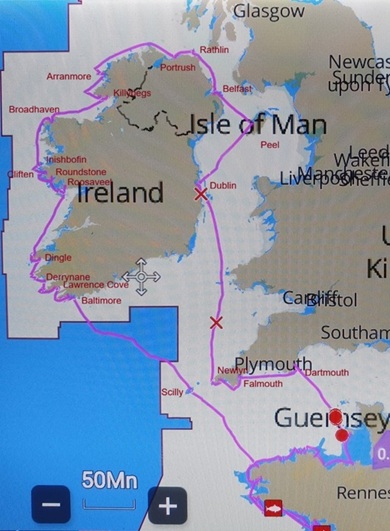
Departure from the Loire estuary on April 17th. Crossing to the Isles of Scilly on May 5th. Arrival in Ireland on May 10th. Guernsey on July 10th. Then Saint-Malo, La Rochelle and Vannes for wintering.
Trip details
From Aber Wrac'h, the crossing to the Isles of Scilly takes 15 hours. Then a weather window quickly opens up for sailing to Baltimore in southwest Ireland. We arrive right in the middle of a music festival. The pubs are packed. We even get to hear an alphorn rehearsal in the middle of a cliffside cirque!
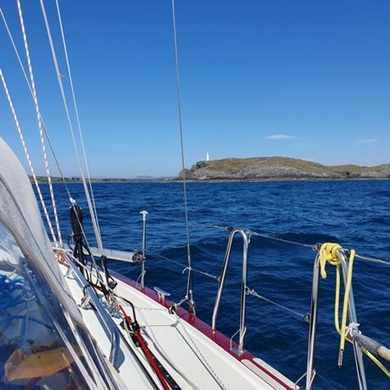
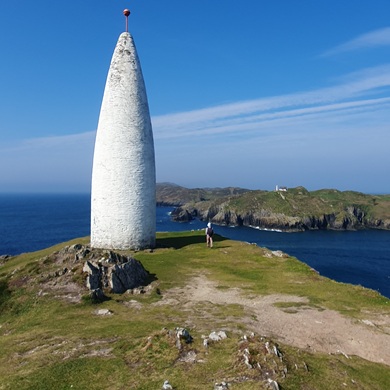
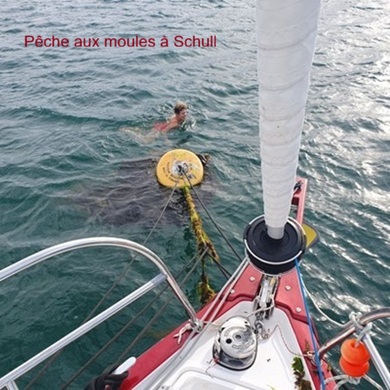
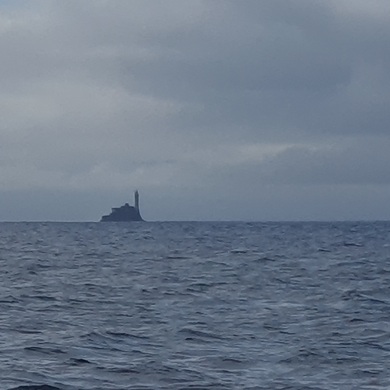
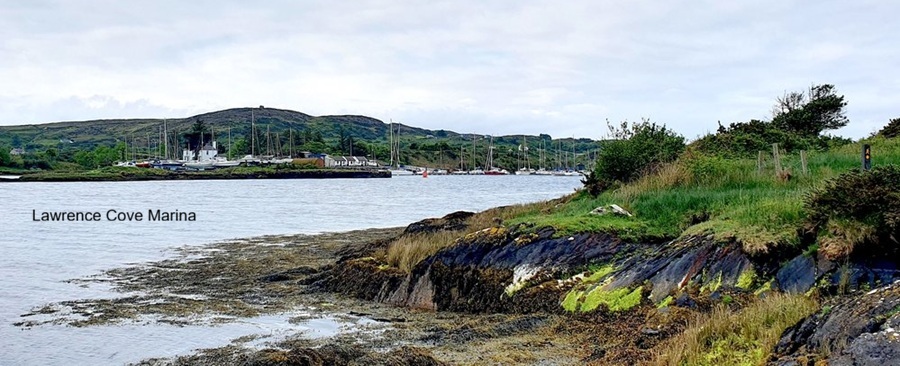
We passed north of the Fastnet Rock after a short stop in Schull, then headed up the west coast. In Bantry Bay, Lawrence Cove Marina on Bere Island is perfectly sheltered, able to withstand a gale.
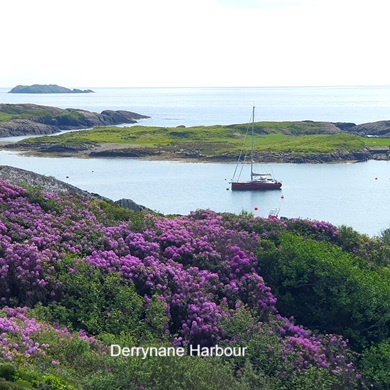
 Dursey Head and its currents will leave us with lasting memories, as will the narrow entrance to Derrynane Harbour! A few visitor buoys within a completely enclosed natural harbor. General de Gaulle would have been captivated by this place.
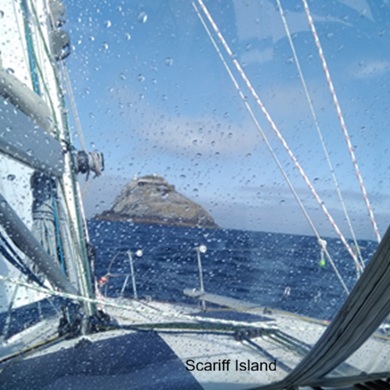
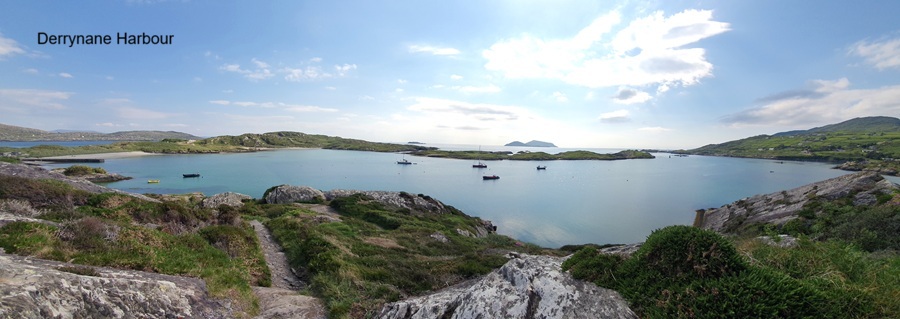
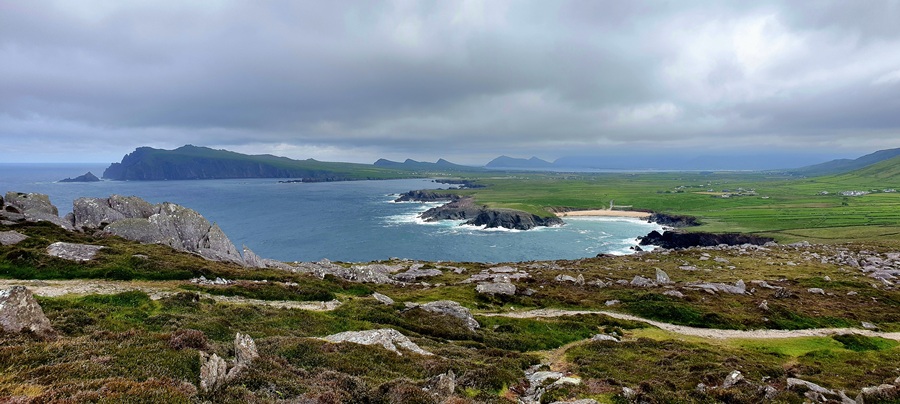
After the spectacular passage through the Skellig Islands, a magnificent bird sanctuary, Dingle Bay welcomes us for almost a week. (Click on the thumbnails to enlarge)


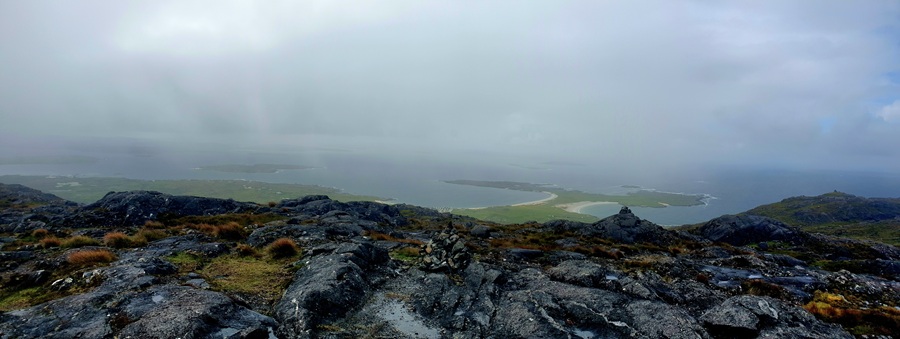
Between two gales, a window of opportunity arose to reach the northern Aran Islands at night. This was quite convenient, as true night only lasts three or four hours at this time of year (late May). The Roundstone anchorage offered perfect shelter from the northerly winds expected over the next few days. Be careful of the sill at the entrance to the anchorage! A magnificent hike on Errisbeg offered a 360-degree view, allowing us to admire Maumeen Lough, the Twelve Bens, and of course, the anchorage.
The wind is still blowing from the north, and we're continuing north towards Clifden, a long fjord open to the west. The forecast predicts a day of moderate northerly winds; we should be safe on a visitor's buoy in front of the yacht club. However, forecasts can be unpredictable, and the stopover will prove to be a bad idea for the next two days: 25 to 30 knots from the northwest and a heavy chop. The advice in these conditions is to head southeast along the rest of the fjord to anchor in a bit more shelter at the far end.
The town of Clifden is a 20-minute walk along the river. It has absolutely everything you could possibly need. Showers and drinking water are available at the yacht club. (Click on the thumbnails to enlarge).


Next stop under the sun and we drop anchor in Inishbofin, a little paradise! Swimming and hiking every day!
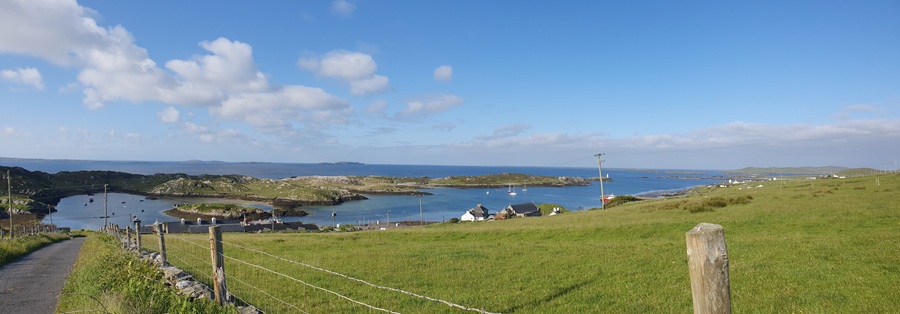
After 11 hours at sea, we found a mooring buoy in Brodhaven before reaching the fishing port of Killybegs the next day. Killybegs is Ireland's largest fishing port by tonnage. But not a fish market! The pontoon that serves as a marina welcomes a few visitors, but the restrooms have been under construction for over a year.
The town of Donegal is easily accessible by bus, and from there, Derry in Northern Ireland is also easily accessible. And of course, a hike along the Slieve League cliffs is a must. (Click on the thumbnails to enlarge)


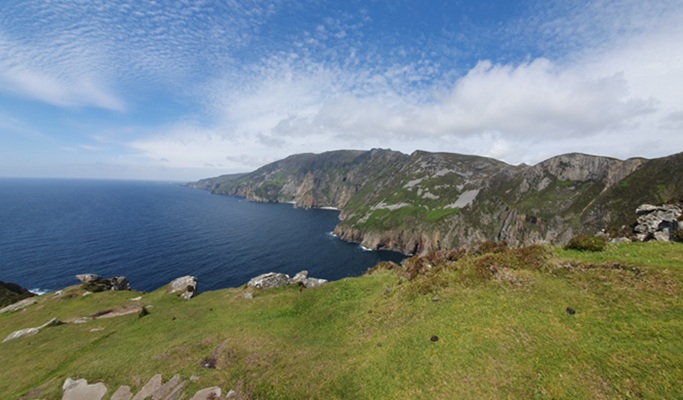
After 6 days of rest, we set off again to sail in heavy seas to Aranmore. A few more hours of close-hauled sailing followed the next day before we turned east, passed Malin Head, and reached Portrush in Northern Ireland after 17 hours of sailing.
The visitor pontoon is very small; another option if it's full is to go to Ballycastle a little further east. A visit to the Giant's Causeway is a must here! (click on the thumbnails to enlarge)


Rathlin Island is within easy reach, and there's plenty of space in the small marina. The welcome is very friendly, and bike rentals and walking allow you to explore the entire island. Don't miss the absolutely magnificent bird sanctuary. And of course, the seals are just a stone's throw from the marina and in the south of the island. Scotland is practically on your doorstep. Sophie is already making plans, but Georges is adamant: it's southward now! (Click on the thumbnails to enlarge)


You really have to take the currents into account when sailing towards Belfast, between Rathlin and the north of Ireland of course, but also for the descent of the Irish Sea. A sailboat that left 5 hours before us took 4 hours longer to complete the leg.... Superb downwind leg and 1 hour with the spinnaker up. (click on the thumbnails to enlarge)


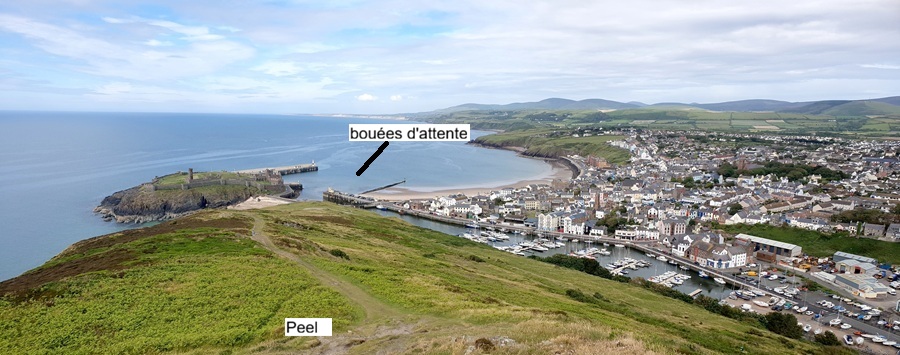
Early departure for a 14-hour sail to Peel on the Isle of Man, where there are moorings not well sheltered by the breakwater in case of a northerly swell, but which allow you to wait for the harbor gate to open. Exploring the island by bus and on foot: Douglass, Ramsey, St. Mary's, St. Erin (where an anchorage might be an option before continuing south without being restricted by the opening times of Peel's harbor gate).
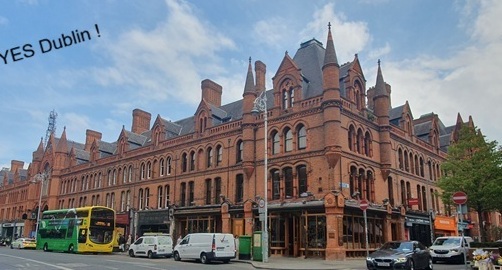
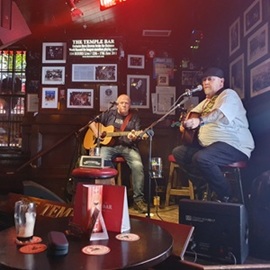
Another long leg to Dublin and Temple Bar! From Dun Laohaire marina, Dublin city centre is easily accessible by train (30 minutes). This stopover is well worth a few days' stay.
After much deliberation between Arklow and Milford Haven for the next leg, Sophie suggested heading straight for Newlyn to avoid being stuck in strong southerly winds for a few days. It was a 250 nautical mile journey with quite a bit of sailing involved during the night.
The cruise continues in Cornwall to Dartmouth before crossing to Guernsey on July 10th. Beaucette Marina will be our home for a few days. The entrance to this small marina north of St. Peter's Port is spectacular, nestled among the rocks.
Warranty work requires us to go back down to La Rochelle before wintering in Vannes.
An initial assessment
Tour of Ireland itself from May 9th in the Scilly Isles to July 2nd in Newlyn in almost 2 months.
Almost all sailing in 20 stages, nobody on the water (only two French sailboats and three English ones encountered in the west and north), only one westerly gust of wind at 35 kts well announced.
A lot of close-hauled sailing up the west coast (compared to what we usually do on cruises), in often choppy and rough seas. It's a bit rough! According to Sophie, the Irish Sea means we'll definitely be mooring for the rest of the cruise, and possibly all future cruises!
We only had to drop anchor three times thanks to the numerous visitor buoys, large yellow cylinders marked "Maxi 15 T". They weren't always in the best spots; sometimes you'd need to anchor further into the fjord to be well sheltered from the chop in strong winds. The Navilly app is very useful for finding anchorages and harbors, and we did our best to help.
We had no problems with supplies. We had jerrycans of water and fuel which we filled as soon as possible.
Many splendid walks along the coast, in the wet moors and along salmon rivers.
The only means of transport used on land for supplies, hiking and sightseeing: feet and buses.
